Blog
Can ChatGPT deploy a web app to a live URL?
ChatGPT can write the app, but it has no hosting of its own: the link comes from a tool you give it. Tofu's plugin in OpenAI's plugin directory is one, and it puts the app online. The plugin leaves out a managed database and sign-in; those come from a coding agent or the dashboard.
Updated
The short answer
ChatGPT can write an app's code in a chat. It has no hosting of its own, so the link to the app comes from a tool the chat can call. Tofu's plugin in OpenAI's plugin directory is one of those tools: it takes the files the chat wrote, runs Tofu's check over them, builds the app and puts it online at an address anyone can open. You approve the connection once on Tofu's own page, with the short code the browser shows; no key or password goes into the chat. If your ChatGPT does not offer Tofu from the directory, add it by its address instead.
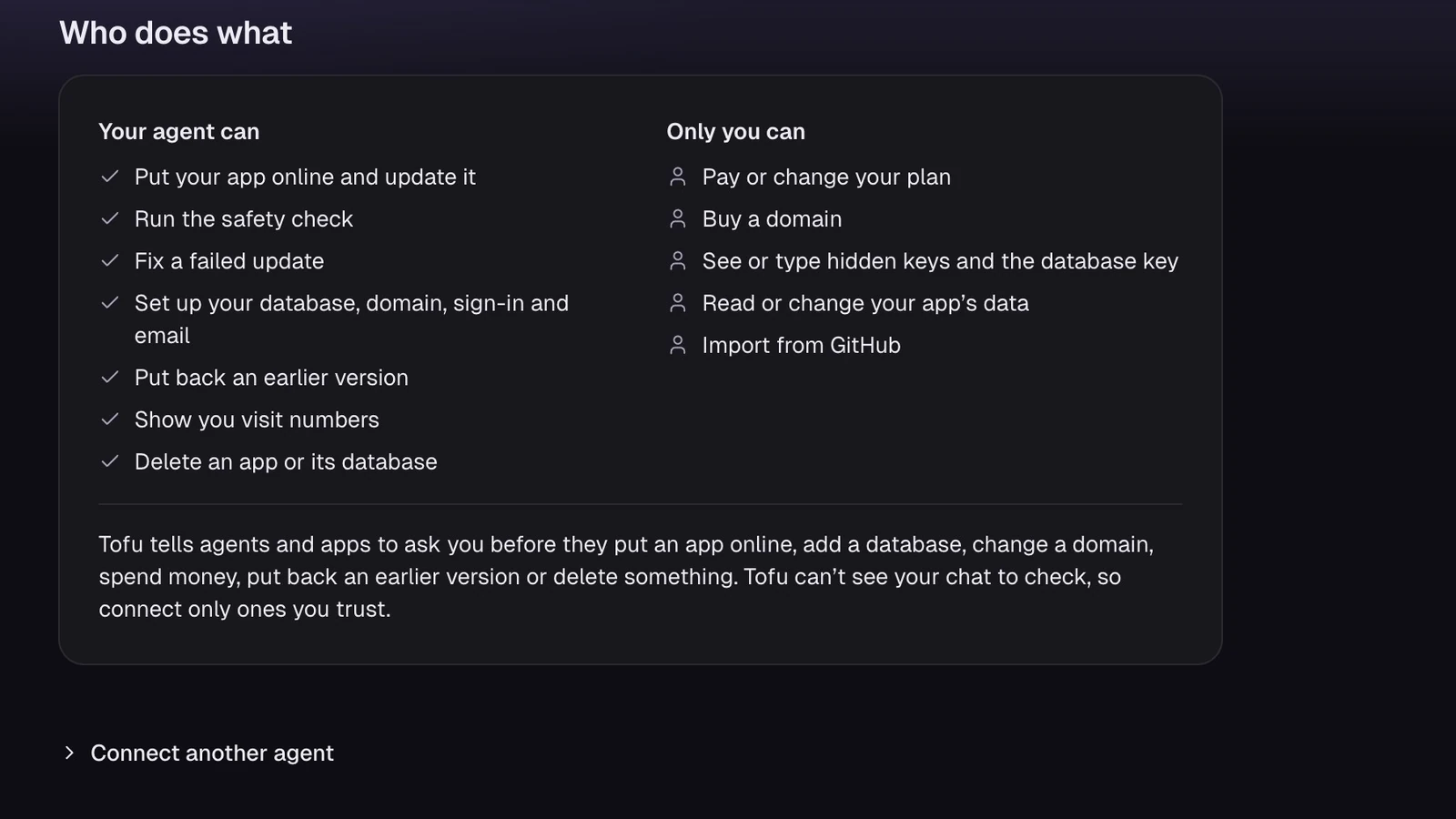
What the plugin does not bring: the managed database, sign-in for the app's own people and its sign-in email, invite links and sharing, GitHub automatic updates, the builder link and the problem report are not in ChatGPT's version of Tofu. An app that a chat writes and sends goes online without saved data or a sign-in button. For those, connect a coding agent to Tofu or use the dashboard.
What the plugin does
- It takes the files the chat wrote, not a folder on your computer. One chat upload carries at most 500 files and 1,536 KB.
- It runs Tofu's check over the files, builds the app and gives it an address over HTTPS.
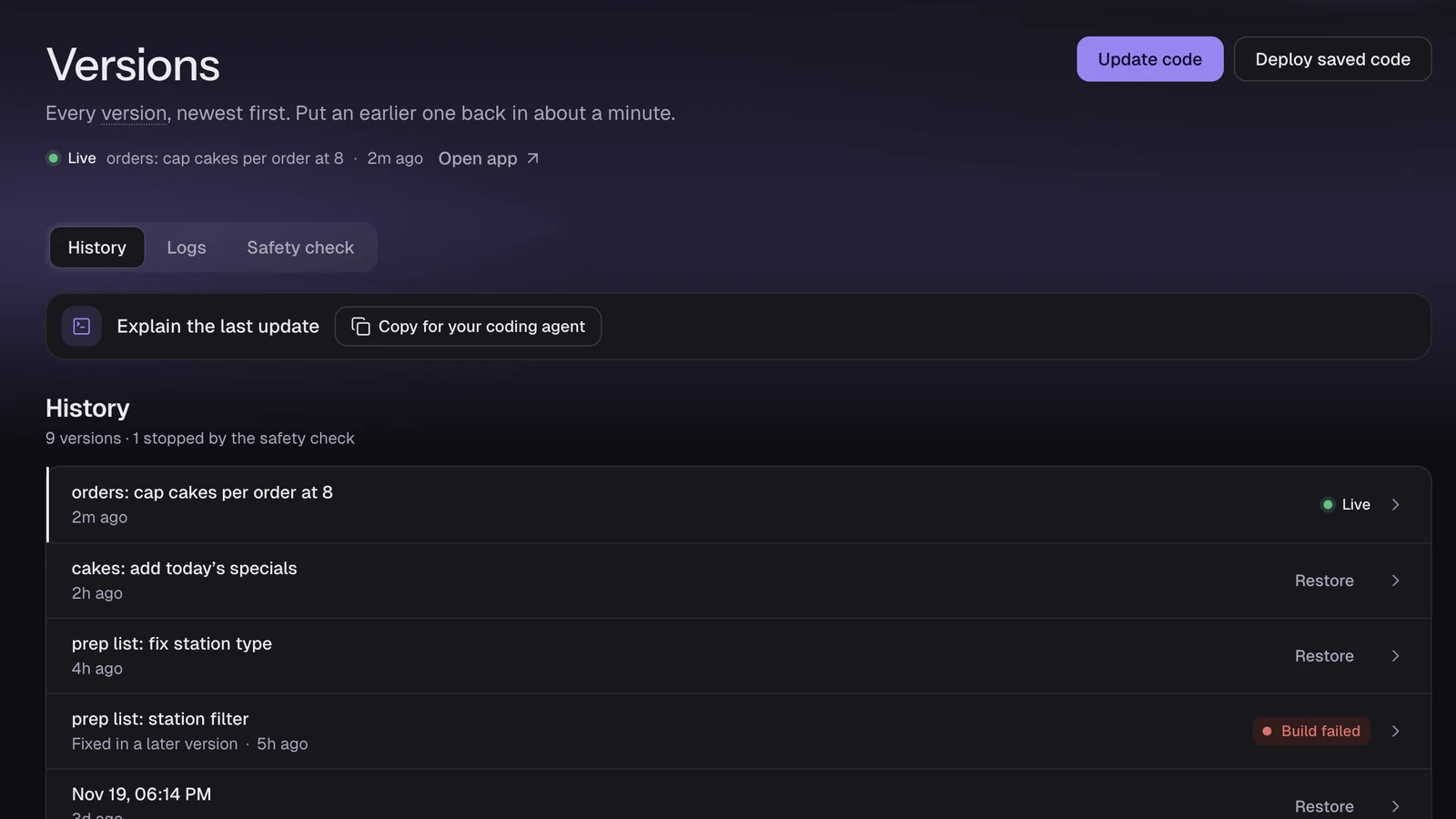
- A later message can send an updated app to the same address, and the app keeps its address.
- The app's own code has to be complete. A screen that uses sample data, or a service that exists only inside the chat, needs ordinary app code before it works elsewhere.
What it leaves out
- A managed database. The deploy in ChatGPT's version never creates one; a call that asks for a database is refused. Saved data needs another way in: a coding agent connected to Tofu, or the app's Database page in the dashboard.
- Sign-in for the app's own people, and the app's sign-in email. The app's Sign-in page in the dashboard, or a coding agent, sets those up.
- Invite links and sharing, GitHub automatic updates, the builder link and the problem report.
Where each need goes
| The app needs | Through the plugin | Where to go instead |
|---|---|---|
| An address anyone can open | Yes: the chat sends the files, and Tofu puts the app online | Nothing else |
| A database | No: the deploy never creates one | A coding agent connected to Tofu, or the app's Database page |
| Google sign-in | No: the sign-in tools are left out | The app's Sign-in page, or a coding agent |
| A folder on your computer | No: the plugin takes the files the chat wrote | A coding agent on the machine that holds the folder |
| Updates from GitHub | No: the automatic-update tools are left out | The dashboard, or a coding agent |
A coding agent here means Claude Code, Codex, Cursor or another agent that can read the app's folder; the agent page connects one to Tofu. The same connection lets the agent create the database and turn on sign-in.
Questions
Does ChatGPT have hosting of its own?
No. A chat writes code, and putting that code on the internet needs a service behind the tool the chat calls. Tofu supplies the service for the plugin: the files go to your Tofu account, and the app is built and served there.
Where do the app's files come from?
From the chat. A chat upload carries at most 500 files and 1,536 KB, which fits most app source folders. A folder on your computer goes through a coding agent instead, since a chat cannot read a disk.
Can the app get saved data later?
Yes, and not from the chat. Connect a coding agent to Tofu, or open the app's Database page in the dashboard. The app's own code creates the tables and the access rules; the Database page's setup steps say how those files are applied.
Can I add sign-in later?
Yes, from the app's Sign-in page or through a coding agent. The app still needs a button and code that reads the session Tofu hands back.
What happens when I close the chat?
The app stays online. The chat sends the files and asks Tofu to build; after that the address is Tofu's, not the chat's.
What do I need to start?
A Tofu account. The pricing page lists the plans and what each one carries, and the chat docs cover adding Tofu, the approval page and disconnecting.